
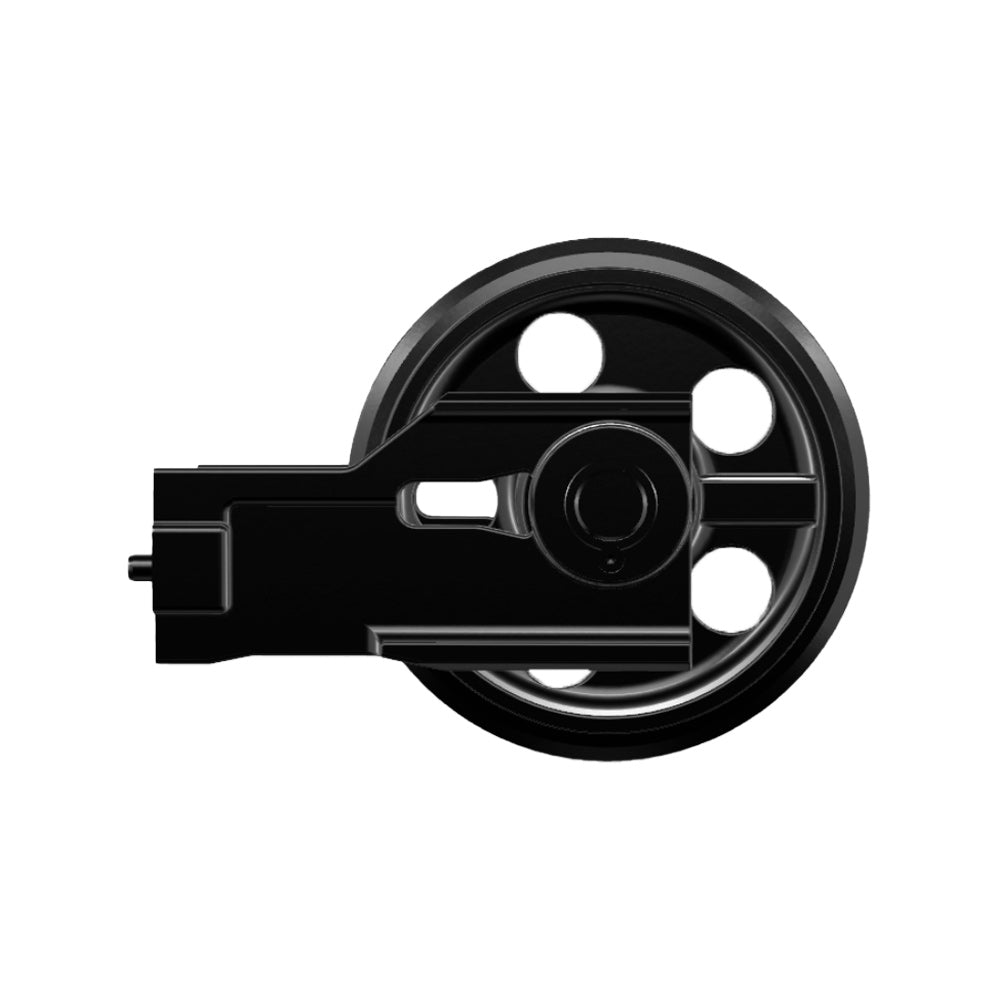
Excavator drifting to one side is most often caused by misaligned or worn front idlers, which account for a significant portion of steering issues in heavy machinery. To diagnose: inspect idler gap (gaps exceeding 2mm indicate misalignment), measure flange wear (replace if exceeding OEM tolerance), and check track tension balance. Addressing idler wear early prevents costly downtime and secondary damage to your undercarriage system.
Check: Idlers & Sprockets
What Causes Excavator Drifting and Why Is the Idler Usually the Culprit?
Tracked excavators drift when the undercarriage loses alignment, pulling consistently left or right during straight travel. The front idler guides and centers the track chain, absorbing lateral forces. When idler flanges wear or become misaligned, the track sits off-center, causing uneven contact with rollers and sprockets. This creates steering lag and directional pull. Secondary causes include carrier roller wear, sprocket misalignment, and uneven track tension, but idler wear remains the primary culprit in Canadian heavy equipment operations. Early detection prevents cascade failures through the entire undercarriage assembly.
How Can You Spot Misaligned Idler Symptoms Before Major Downtime?
Visual inspection reveals uneven track wear patterns and visible gaps between idler and track shoes. Operationally, the machine pulls left or right during grading, struggles to hold a straight course, and requires constant operator correction. Sagging track on one side indicates top roller (carrier roller) wear compounding idler failure. Safety implications are serious: operator fatigue, reduced precision during precision digging, and increased accident risk on slopes or near property. Canadian contractors should inspect after 500–1,000 hours or seasonally post-winter, especially in salt-spray coastal regions of BC and Atlantic provinces where freeze-thaw cycles accelerate corrosion.
What Are the Step-by-Step Inspection Procedures for Canadian Repair Shops?
Pre-inspection prep: Position machine on flat, level ground with engine off. Gather tools: dial caliper, straight edge, wear gauge, torque wrench, and safety blocks. Measurement points: Check idler flange thickness at wear and unworn zones, measure gap clearance between idler and track shoes at multiple positions, verify axle bolt torque (varies by brand—typically 150–250 Nm). Red flags: Cracks, lateral play exceeding 3mm, excessive rust, and uneven wear zones warrant replacement. Document findings with photos for warranty and maintenance records.
| Machine Brand | OEM Idler Gap Tolerance | Flange Wear Threshold | Action Required |
|---|---|---|---|
| Caterpillar (CAT) | 0–1.5mm | >1.5mm | Replace |
| Komatsu | 0–1.2mm | >1.8mm | Replace |
| Bobcat | 0–1.8mm | >2.0mm | Adjust or Replace |
| Kubota | 0–1.0mm | >1.5mm | Replace |
| Hitachi | 0–1.4mm | >1.6mm | Replace |
| John Deere | 0–1.3mm | >1.7mm | Replace |
How Should You Measure Idler Wear Accurately Using Proper Tools?
Measure flange thickness at three zones: the wear-hardened surface (outer edge), mid-flange, and unworn interior edge. Compare readings to OEM tolerance—if outer wear exceeds threshold, replacement is necessary. Measure track engagement depth using a straight edge against the idler face; depth variance >1.5mm signals misalignment. Check lateral play by hand, applying sideways force to the idler—play >3mm indicates axle wear and requires replacement. Document all measurements with date and machine hours for fleet maintenance tracking and warranty claims.
When Should You Adjust an Idler Versus Replacing It Entirely?
Adjustment scenario: Minor gap variance (0.5–1mm), no visible cracks, flange wear within OEM tolerance, and lateral play <1.5mm. Shimming or realignment takes 1–2 labor hours. Replacement scenario: Flange wear exceeds tolerance, visible damage (pitting, cracking), axle play >3mm, or uneven wear patterns. Replacement parts from AFT Parts range CAD $143–$547 depending on brand and model, plus 2–4 hours labor. Cost-benefit: adjustment labor (~CAD $150–$250) versus replacement (parts + labor, ~CAD $400–$900). Downtime advantage: AFT Parts Canada-wide fulfillment enables same-day or next-day delivery to Alberta, BC, Ontario, Quebec, and all provinces, reducing downtime to 6–24 hours versus weeks with OEM dealer backorders.
Check: Do Hyundai Timing Chains Need to Be Replaced: What Drivers Should Know
Why Does AFT Parts' 12-Month Warranty Protect Your Bottom Line?
OEM dealer idlers often cost 40–60% more than OEM-spec aftermarket alternatives. AFT Parts manufactures idlers to exact OEM specifications for CAT, Komatsu, Bobcat, Kubota, Hitachi, John Deere, Kobelco, Case, Doosan, JCB, Yanmar, and 10+ additional brands. Every idler carries a 12-month Pro Rated Limited Warranty, eliminating premature failure risk. Competitive pricing combined with warranty coverage means lower total cost of ownership. Canadian procurement advantage: free ground shipping to most provinces and WhatsApp support (+1-236-965-6529) ensure rapid parts availability. Whether you manage a 5-machine contractor fleet or 100-unit rental operation, AFT's warranty removes financial risk from aftermarket component investment.
AFT Parts Expert Views: "Contractors often delay idler replacement because OEM parts seem prohibitively expensive. What they overlook is that a misaligned idler causes 5–10% fuel waste and accelerates carrier roller and track shoe wear—tripling repair costs within 200 hours. An OEM-spec AFT idler investment at CAD $200–$350 prevents thousands in secondary damage. Plus, our 12-month warranty means you're protected if anything unexpected occurs. The real ROI is measured in avoided downtime and secondary failures, not just parts pricing."
Which Brand-Specific Idler Solutions Does AFT Parts Offer Across Canada?
Caterpillar (CAT): AFT stocks OEM-spec idlers for 320, 330, 325, 390 models and larger excavators. Part numbers match OEM specifications for seamless fitment. CAD $250–$450 range with 12-month warranty and Canada-wide availability.
Komatsu: Full coverage of PC series (PC30R-8, PC40R-8, PC45MRX-1, and similar models). AFT's Carrier Roller 9239529 (compatible with multiple Komatsu models and other brands) demonstrates cross-brand efficiency. CAD $143–$300 depending on model, same-day to next-day delivery.
Bobcat: Mini excavator and compact track loader idlers for E26–E50Z and 325–430 series. Bobcat's lighter duty applications benefit from AFT's precision-engineered designs. CAD $200–$400 per unit.
Kubota: Idler solutions for KX033, KX040, KX080 series with Kubota's stricter tolerance requirements. AFT meets OEM specifications precisely. CAD $180–$350 depending on model size.
Hitachi: ZX27, ZX50, and larger series covered. Hitachi operators appreciate AFT's rapid parts availability across Canadian provinces. CAD $220–$420.
John Deere: 35G, 50G, 160G CLC models and other John Deere excavators. Full compatibility assurance with OEM part number cross-reference. CAD $190–$380.
All brand-specific idlers include 12-month Pro Rated Limited Warranty, OEM-spec manufacturing, and Canada-wide fulfillment. Contact AFT Parts via email (support@aft-parts.com) or WhatsApp (+1-236-965-6529, Monday–Friday 9 AM–5 PM) for availability and custom quotes.
How Can You Extend Idler Life and Reduce Future Drifting Issues?
Inspect idlers visually every 500 operating hours; perform formal measurement checks every 1,000 hours. Maintain balanced track tension across both sides—uneven tension overloads one idler and accelerates wear. In Canadian winter regions, wash undercarriage regularly to remove salt spray and debris that accelerate corrosion, especially critical for coastal BC and Atlantic operations. Operate with smooth steering inputs, avoid hard turns at low speed, and keep track shoes clean of packed mud. Document all maintenance in fleet logs—contractors using formal inspection schedules reduce unexpected failures by 60–70%. Downtime prevention through predictive maintenance delivers higher equipment availability and lower per-hour operating costs.
What Should You Know About Preventative Maintenance Documentation?
Maintain equipment maintenance logs recording inspection date, machine hours, measurements taken, parts replaced, and labor hours invested. Digital fleet management systems allow contractors and rental companies to track component wear across multiple machines, identify trending failures, and schedule parts procurement strategically. Documentation supports warranty claims, demonstrates due diligence to insurance carriers, and protects resale value when selling used equipment. For Canadian dealers managing multi-province operations, centralized maintenance records enable regional parts forecasting and reduce emergency downtime calls.
Can You Ignore a Small Idler Gap and Continue Operating Normally?
Short term (1–2 weeks), operationally yes. Strategically no. Small gaps (0.5–1mm) compound track wear exponentially—what is a CAD $250 adjustment today becomes a CAD $5,000 undercarriage replacement within 200 operating hours. Unaddressed gaps accelerate carrier roller and sprocket wear, creating cascade failures requiring complete undercarriage rebuild. AFT Parts recommends addressing detected gaps within 50 operating hours to prevent secondary damage. The cost of preventative idler adjustment or replacement is minimal compared to full assembly failure.
How Long Does Typical Idler Replacement Take at a Repair Shop?
Standard replacement requires 2–4 hours of labor depending on machine model and shop efficiency. With AFT Parts Canada-wide fulfillment, parts sourcing takes same-day to next-day delivery (compared to 1–3 weeks with OEM dealer backorders). Total equipment downtime: 6–24 hours for AFT sourcing plus labor, versus 2–4 weeks waiting for OEM dealer delivery. For contractors operating on tight project schedules, this downtime reduction translates directly to retained revenue and customer satisfaction, making AFT's rapid parts availability a competitive advantage.
What's the Difference Between AFT's OEM-Spec Idlers and Cheaper Generic Aftermarket Options?
Material hardness and dimensional tolerance separate premium aftermarket from budget alternatives. AFT's OEM-spec idlers match Caterpillar, Komatsu, and other OEM engineering standards with tolerances of ±0.1mm. Budget aftermarket options often operate at ±0.5mm tolerance, causing premature wear and misalignment. Bearing quality, steel composition (typically 65Mn induction-hardened per AFT specifications), and manufacturing process longevity differ significantly. AFT's 12-month warranty covers manufacturing defects; cheap alternatives rarely provide warranty protection. True cost-per-operating-hour: AFT OEM-spec idler approximately CAD $0.30–$0.50/hour over lifespan; budget alternatives approximately CAD $1.50–$2.00/hour due to frequent replacement cycles and associated downtime.
Do All Excavator Brands Use Identical Idler Designs?
No. Each manufacturer—CAT, Komatsu, Bobcat, Kubota, Hitachi, John Deere, Kobelco, Case, Doosan, and others—designs idlers to proprietary specifications. Cross-brand substitution voids warranty, risks undercarriage damage, and creates alignment problems that compound steering issues. AFT Parts stocks brand-specific idlers for 20+ machine manufacturers. Always confirm OEM part number and machine model before ordering. AFT's technical support team (support@aft-parts.com, +1-236-965-6529) provides free consultation to ensure correct part selection, preventing costly installation errors.
Can You Adjust an Idler Yourself Without Certified Technician Support?
Adjustment (shimming/realignment) is mechanically straightforward but requires precision tools, safety training, and heavy lift capability. Most Canadian contractors partner with certified repair shops for liability protection and warranty preservation. AFT offers technical consultation via email or WhatsApp to guide DIY operators through measurement steps and troubleshooting. For self-service adjustment, ensure machine is safely blocked, idler axle is accessible, and you possess calibrated measurement tools. For safety and warranty protection, professional shop involvement is recommended, especially for critical mining and rental fleet operations where equipment reliability directly impacts revenue.
How Does Regular Idler Inspection Affect Total Operating Costs?
Contractors investing 2 hours annually in idler inspection save 5–10 times that investment in avoided downtime and secondary damage repairs. One prevented undercarriage failure (costing CAD $8,000–$15,000 in parts and labor) justifies dozens of preventative inspections. For equipment rental fleets, predictable maintenance schedules improve equipment availability, reduce emergency repairs, and support higher utilization rates and revenue-per-machine. Mining and forestry operators benefit from reduced unplanned downtime that disrupts project schedules and client relationships. Preventative idler maintenance is among the highest ROI maintenance investments heavy equipment owners can make.
What Safety Risks Does a Misaligned Idler Create for Operators?
Steering control degradation forces operators into constant course correction, increasing fatigue and reducing precision during critical tasks like slope work or tight site environments. Reduced machine responsiveness creates accident risk, especially on grades or near structures and personnel. Uneven track tension from idler misalignment can cause sudden track derailment during operation, posing serious safety hazards. Regulatory compliance and operator safety protocols mandate addressing known steering issues. Contractors have duty-of-care responsibility to maintain equipment in safe operating condition; documented idler inspections demonstrate compliance and protect against liability claims.
How Should Rental Fleet Managers Approach Idler Maintenance Across Multiple Machines?
Centralized inspection scheduling ensures all fleet machines receive consistent maintenance regardless of current renter or location. Implement preventative replacement schedules based on operating hours rather than reactive failure response. Pre-rental equipment inspections catch idler wear early, preventing rental downtime and customer dissatisfaction. Stock idler parts for common machine models in your fleet—AFT Parts' competitive pricing makes strategic parts inventory affordable. Regional distribution across Alberta, BC, Ontario, Quebec, and other provinces enables rapid parts procurement when needed. Rental fleet managers using formal maintenance protocols reduce customer complaints, improve equipment resale value, and protect fleet investment through extended machine lifespan.
Are There Regional Considerations for Canadian Idler Maintenance Across Different Provinces?
Yes. Coastal BC and Atlantic operations face accelerated corrosion from salt spray; enhanced winter undercarriage washing is essential. Prairie operations (Alberta, Saskatchewan) encounter dust and abrasive soil that accelerate wear; filter maintenance and routine cleaning reduce contamination. Central Canadian winters (Ontario, Quebec) bring freeze-thaw cycles that stress fasteners and cause seasonal misalignment—spring inspections are critical. Northern operations (Newfoundland, Manitoba) combine corrosion and extreme cold; qualified technicians and reliable parts supply are essential. AFT Parts serves all Canadian provinces with Canada-wide fulfillment, understanding regional climate challenges. Localized expertise and fast parts availability are advantages for contractors operating across multiple provinces.
Should Equipment Dealers Recommend Idler Inspection to Used Equipment Buyers?
Yes. Pre-sale idler inspection and documented certification increase resale value and buyer confidence. Dealers offering "professionally inspected undercarriage" as a selling point attract serious buyers willing to pay premium for proven equipment condition. Documentation of idler measurements and maintenance history supports asking price and differentiates your inventory. OEM-spec AFT Parts replacements enable dealers to refresh undercarriage components cost-effectively before resale, improving gross margins. Buyers appreciate transparent undercarriage documentation; dealers benefit from faster sales cycles and customer satisfaction. Idler inspection and certification is value-add that strengthens dealer reputation and customer relationships.
Conclusion
Excavator drifting to one side is a diagnostic gateway to preventing catastrophic undercarriage failure. Misaligned or worn idlers are the most common culprit (representing a significant portion of steering complaints), but also the most fixable when caught early. A simple 2-hour inspection twice yearly prevents 5–10 times that investment in avoided downtime and secondary damage.
Canadian contractors, equipment rental companies, repair shops, and mining operators benefit from systematic idler inspection protocols. Early detection and timely replacement—using OEM-spec aftermarket components from AFT Parts—eliminate unexpected failures and keep equipment productive. AFT's 12-month Pro Rated Limited Warranty, competitive CAD pricing (CAD $143–$547 depending on brand and model), and Canada-wide fulfillment remove cost and logistics barriers to preventative maintenance.
Whether you manage equipment in Alberta, BC, Ontario, Quebec, or any Canadian province, prioritize idler inspection as essential preventative maintenance. Contact AFT Parts' technical support team today—WhatsApp +1-236-965-6529 or email support@aft-parts.com—to request a free idler assessment, learn inspection techniques, and source OEM-spec replacement components. Don't wait for a major breakdown. Preventative action today protects your bottom line tomorrow.
Frequently Asked Questions
Q: What's the typical cost to replace an idler at a Canadian repair shop?
Idler replacement parts from AFT Parts range CAD $143–$547 depending on brand and model size. Labor typically adds CAD $250–$500 (2–4 hours). Total investment: CAD $400–$1,000. This is significantly less than the CAD $5,000–$15,000 cost of full undercarriage rebuild resulting from untreated idler failure. Prevention through early replacement is economically optimal.
Q: How often should heavy equipment operators inspect idlers?
Visual inspection every 500 operating hours; formal measurement checks every 1,000 hours or annually for seasonal operations. Coastal or winter-intensive operations should increase inspection frequency to 400 hours due to corrosion and freeze-thaw stress. Rental fleet equipment should be inspected between each rental or monthly, whichever comes first.
Q: Can AFT Parts replace idlers for machines outside the major brands listed?
AFT covers 20+ machine brands including Caterpillar, Komatsu, Kubota, Bobcat, Hitachi, John Deere, Kobelco, Case, Doosan, JCB, Yanmar, and many others. If your machine brand isn't listed, contact AFT's technical support team at support@aft-parts.com or +1-236-965-6529 (WhatsApp available) to check availability and request custom solutions.
Q: How long does parts delivery typically take with AFT Parts across Canada?
Same-day to next-day delivery to major Canadian provinces including Alberta, BC, Ontario, and Quebec. Delivery to more remote regions may require 2–3 business days. Free ground shipping is included for most Canadian destinations, making AFT significantly faster and more cost-effective than OEM dealer channels.
Q: Are AFT Parts idlers covered by warranty if installed by my own technician?
Yes. AFT's 12-month Pro Rated Limited Warranty applies regardless of whether installation is performed by a certified shop or your internal technician, provided installation follows OEM specifications. Warranty excludes damage from improper installation, misuse, or operator error. AFT's technical team can provide installation guidance via email or WhatsApp to support proper setup.