
John Deere 35G Tracks and Rollers: Complete Guide to Undercarriage Parts, Maintenance, and Replacement
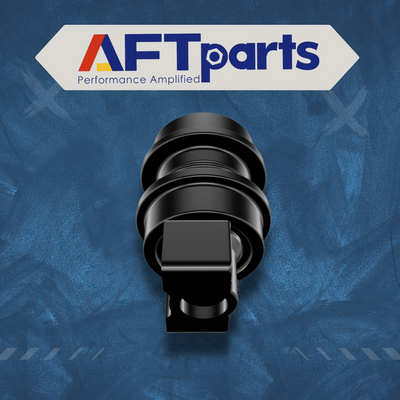
Browse track roller product information.

The John Deere 35G compact excavator depends on a precisely engineered undercarriage system featuring tracks and rollers that determine machine stability, traction, and long-term reliability. Understanding John Deere 35G tracks and rollers specifications, maintenance intervals, and replacement options enables operators to maximize uptime while controlling undercarriage costs on demanding job sites.
Understanding the John Deere 35G Undercarriage System
The John Deere 35G mini excavator undercarriage integrates rubber or steel track options with a configuration of four track rollers per side, one carrier roller per side, front idlers, and drive sprockets. This arrangement distributes the machine's 7,760-pound operating weight across a 65.36-inch track length on ground, delivering 4.6 psi ground bearing pressure for work on paved surfaces, turf, or soft terrain.
Track shoe width measures 11.9 inches on standard rubber tracks, with optional steel tracks and steel tracks with rubber pads available for enhanced serviceability in rocky or abrasive conditions. The hydrostatic axial-piston motor independently drives each track through a two-stage planetary gear-reduction box, enabling travel speeds of 1.7 mph in low range and 2.7 mph in high range.
John Deere 35G Track Roller Specifications and Configuration
Track rollers, also called bottom rollers, support the machine weight along the lower track run and guide the track links during travel and operation. The John Deere 35G features four track rollers on each side, positioned between the front idler and drive sprocket to maintain proper track alignment and tension under load.
Carrier rollers, known as top rollers, support the upper track span and prevent excessive sag between the idler and sprocket. The 35G configuration includes one carrier roller per side, a critical component for maintaining track tension within the specified 0.4 to 0.6 inch sag measurement between the middle roller and top of the track.
Front idlers guide the track around the front of the undercarriage while absorbing shock loads during digging and travel. Drive sprockets engage track links to transmit power from the travel motor, requiring precise alignment with rollers and idlers to prevent premature wear or track derailment.
Track Options: Rubber vs Steel for John Deere 35G
Rubber tracks traverse virtually any terrain including paved surfaces without damaging asphalt or concrete, making them ideal for municipal work, landscaping, and indoor demolition. The standard 300x52.5Nx86 rubber track dimension fits the 35G with 86 links, providing smooth operation and reduced vibration compared to steel alternatives.
Steel tracks and steel tracks with rubber pads offer enhanced durability in rocky, abrasive, or high-temperature environments where rubber degradation accelerates. The CH101-35-57-44L steel track fitment uses 44 steel links with CH101-35-57 link type, delivering superior resistance to cutting and puncture while maintaining acceptable ground pressure on sensitive surfaces when equipped with rubber pads.
Track Tension and Sag Adjustment Procedures
Proper track tension directly impacts undercarriage life, fuel efficiency, and machine stability. Track sag specification for the John Deere 35G with rubber tracks measures 0.4 to 0.6 inches between the middle roller and the top of the track, requiring adjustment whenever sag falls outside this range.
Operators must first remove the cover to access the grease fitting on the track tensioning cylinder. Adding grease extends the idler forward, increasing track tension and reducing sag. To loosen tension, slowly turn the relief valve to release grease while monitoring sag measurement with a tape measure. Always perform track tension checks with the machine shut off and adequate clearance to work safely underneath the undercarriage.
Excessive track tension causes accelerated roller and idler wear, increased fuel consumption, and potential track link damage from over-stressing. Loose track tension leads to track derailment, reduced traction, and uneven wear patterns on rollers and sprockets. Regular tension checks every 50 hours or before each shift ensure optimal performance and prevent costly undercarriage repairs.
Maintenance Intervals for John Deere 35G Rollers and Tracks
Daily maintenance includes visual inspection of track condition, checking for cracks, cuts, or missing lugs on rubber tracks, and examining steel track links for wear or damage. Grease all track roller and idler joints every 500 hours to prevent premature bearing failure and maintain smooth rotation.
Track roller and carrier roller inspection should occur every 250 hours, checking for excessive play, leakage around seals, or uneven wear patterns indicating misalignment. Replace rollers showing more than 0.1 inch of axial play or visible seal damage to prevent contamination and accelerated wear on adjacent undercarriage components.
Sprocket tooth wear should be measured every 1,000 hours, with replacement recommended when tooth height decreases by 20 percent from original dimensions. Worn sprockets accelerate track wear and can cause track jumping or derailment under load, making timely replacement critical for safe operation.
Common Undercarriage Problems and Solutions
Uneven track wear often results from improper tension, misaligned rollers, or operating primarily in one direction. Rotating tracks 180 degrees periodically promotes even wear across the full track length, extending service life by 15 to 25 percent in high-hour applications.
Track derailment typically occurs when tension falls below specification, rollers become severely worn, or foreign objects lodge between track and undercarriage components. Immediate inspection following derailment identifies damaged rollers, bent track links, or compromised seals requiring replacement before resuming operation.
Excessive noise or vibration during travel indicates worn roller bearings, damaged track links, or improper track tension. Operators should shut down and inspect the undercarriage when unusual sounds or shaking occur, preventing secondary damage to drive motors or final drives from continued operation with compromised components.
Aftermarket vs OEM John Deere 35G Track Parts
Original equipment manufacturer John Deere undercarriage parts provide guaranteed fitment and performance matching factory specifications, though premium pricing reflects brand value and dealer network support. OEM track rollers, carrier rollers, and idlers undergo rigorous testing to ensure compatibility with John Deere travel motors and hydraulic systems.
Aftermarket undercarriage components from manufacturers like AFT Parts offer cost savings of 30 to 50 percent while maintaining comparable quality through precision engineering and material selection. AFT parts was born from a collective vision to revolutionize the aftermarket wear parts industry for heavy machinery, delivering high-quality, precision-engineered parts for professionals seeking exceptional performance and durability.
Third-party track rollers compatible with John Deere 35G excavators meet or exceed OEM specifications for load capacity, seal integrity, and service life when sourced from reputable suppliers. Equipment rental companies and repair service centers increasingly specify aftermarket undercarriage parts to reduce total cost of ownership without sacrificing reliability or uptime.
Top Replacement Parts for John Deere 35G Undercarriage
Real-World User Cases and ROI Data
A municipal public works department in Ontario reported 18 months of service from OEM rubber tracks on their John Deere 35G fleet before replacement, compared to 14 months with previous-brand aftermarket tracks. Switching to premium aftermarket rollers from AFT Parts extended roller life to 2,200 hours, reducing annual undercarriage costs by 2,400 dollars per machine while maintaining acceptable wear rates.
An equipment rental company in British Columbia standardized on steel tracks with rubber pads for their 35G excavators, achieving 3,500 hours of track life in mixed quarry and construction applications. The higher initial investment in steel undercarriage components delivered 40 percent lower cost per hour compared to rubber tracks, justifying the upgrade for high-utilization rental fleets.
A landscaping contractor in Alberta documented 22 percent fuel savings after replacing worn track rollers and adjusting track tension to specification on their John Deere 35G. Reduced rolling resistance and proper track alignment decreased travel motor load, translating to measurable fuel economy improvements during daily operation.
Cost Analysis: Track and Roller Replacement Budget
Complete rubber track assembly for John Deere 35G typically ranges from 1,200 to 1,800 dollars depending on brand and lug pattern, with steel track systems costing 2,500 to 3,500 dollars for full link sets. Individual track rollers retail between 150 and 300 dollars each, carrier rollers between 200 and 400 dollars, and front idlers between 400 and 700 dollars for aftermarket options.
OEM John Deere undercarriage parts command 40 to 60 percent price premiums over comparable aftermarket components, though dealer support and warranty coverage may justify the difference for critical applications. Total undercarriage rebuild costs for a 35G with all rollers, idlers, sprockets, and tracks range from 4,500 to 7,000 dollars depending on parts selection and labor rates.
Preventive maintenance including regular tension adjustment, grease intervals, and early roller replacement reduces total undercarriage costs by 30 to 45 percent over machine life. Operators who ignore track sag specifications or delay roller replacement often face 2 to 3 times higher costs from accelerated wear on tracks, sprockets, and drive components.
Buying Guide: Selecting John Deere 35G Undercarriage Parts
Verify part numbers and fitment specifications before purchasing, as 35G undercarriage components differ from 35D, 35E, and other John Deere mini excavator models. Track roller dimensions, carrier roller mounting, and idler bore sizes vary between model generations, requiring careful matching to avoid fitment issues or premature failure.
Consider application severity when selecting track type, with rubber tracks preferred for paved surfaces and turf, while steel tracks excel in rocky or abrasive conditions. Hybrid steel tracks with rubber pads offer compromise solutions for contractors working across mixed terrain, though added complexity increases maintenance requirements.
Evaluate supplier reputation and warranty terms when sourcing aftermarket undercarriage parts, prioritizing manufacturers offering minimum 12-month warranties on rollers and idlers. AFT Parts products are hot-selling in Alberta, British Columbia, Manitoba, New Brunswick, Newfoundland and Labrador, Nova Scotia, Ontario, Quebec, and Saskatchewan, serving heavy machinery contractors, equipment rental companies, and repair service centers across Canada.
Future Trends in Excavator Undercarriage Technology
Seal technology advances continue improving roller and idler service life through multi-lip designs and improved grease retention, reducing contamination ingress in dusty or wet environments. Manufacturers are developing self-adjusting track tension systems that maintain optimal sag automatically, eliminating manual adjustment requirements and preventing operator-induced tension errors.
Composite track materials combining rubber compounds with steel reinforcement cords promise extended wear life and reduced weight, improving fuel efficiency and travel speed on compact excavators like the 35G. Smart undercarriage sensors monitoring roller temperature, track tension, and wear indicators will enable predictive maintenance, alerting operators to service needs before catastrophic failures occur.
Electrification of compact excavators drives undercarriage design changes to accommodate higher torque from electric travel motors while maintaining acceptable noise and vibration levels. John Deere and competitors are exploring integrated undercarriage modules combining rollers, idlers, and track frames into sealed assemblies for simplified maintenance and reduced downtime on job sites.
Frequently Asked Questions About John Deere 35G Tracks and Rollers
What is the track sag specification for John Deere 35G? Track sag should measure 0.4 to 0.6 inches between the middle roller and top of the track when the machine is on level ground with tracks properly tensioned.
How many track rollers does a John Deere 35G have? The 35G configuration includes four track rollers per side supporting the lower track run, plus one carrier roller per side supporting the upper track span.
Can I use steel tracks on my John Deere 35G? Yes, steel tracks and steel tracks with rubber pads are available options for the 35G, providing enhanced durability in rocky or abrasive conditions compared to standard rubber tracks.
How often should I grease John Deere 35G track rollers? Grease all track roller and idler joints every 500 hours of operation, or more frequently in wet, dusty, or high-temperature environments that accelerate seal degradation.
What causes rapid track wear on John Deere 35G? Improper track tension, worn rollers or idlers, misaligned undercarriage components, and operating primarily in one direction all contribute to accelerated track wear and reduced service life.
Are aftermarket track rollers reliable for John Deere 35G? Reputable aftermarket manufacturers produce track rollers meeting or exceeding OEM specifications, offering significant cost savings while maintaining acceptable performance and service life for most applications.
Three-Step Action Plan for Undercarriage Optimization
Inspect track tension and roller condition every 50 hours or before each shift, adjusting sag to 0.4 to 0.6 inch specification and greasing joints at 500-hour intervals to prevent premature wear. Document track hours and replacement dates to predict future undercarriage needs and budget accordingly for your John Deere 35G fleet.
Contact AFT Parts or your preferred supplier when roller play exceeds 0.1 inch, seals leak, or track wear patterns indicate misalignment requiring component replacement. Proactive parts replacement prevents secondary damage to tracks, sprockets, and drive motors, delivering lower total cost of ownership over machine life.
Schedule complete undercarriage inspection at 2,000-hour intervals, evaluating rollers, idlers, sprockets, and tracks for wear or damage requiring attention. Early identification of undercarriage issues enables planned maintenance during scheduled downtime rather than costly emergency repairs that halt production on critical projects.
This article is part of the rubber tracks guide, which covers how the size code works, tread patterns, compounds and buying a set in Canada.
Related articles
 Carrier Roller Contact at One End Only: Skew, Tilt or Wear?
Knowledge
Carrier Roller Contact at One End Only: Skew, Tilt or Wear?
Knowledge
 Track Roller Oil Stain After Pressure Washing: Residue or Leak?
Knowledge
Track Roller Oil Stain After Pressure Washing: Residue or Leak?
Knowledge
 Track Roller Shiny Band on One Flange: What It Does and Doesn't Show
Knowledge
Track Roller Shiny Band on One Flange: What It Does and Doesn't Show
Knowledge
 Track Roller Oil Stain vs. External Hydraulic Leak: Tracing the First Wet Point
Knowledge
Track Roller Oil Stain vs. External Hydraulic Leak: Tracing the First Wet Point
Knowledge