

Identify the right track roller by starting with the machine and position, then matching the part number, diameter, width, shaft, and mounting type. Cross-reference the OEM number with the supplier and confirm fitment against the serial number before ordering.
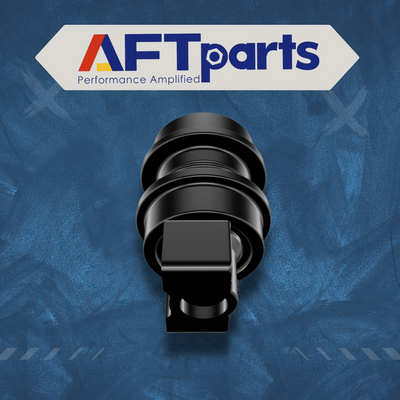
Roller Identification Guidance from AFT Parts
- Manufacturer: AFT Parts — excavator and loader undercarriage components.
- Scope: Roller identification — part number, measurements, mounting
- Fits: OEM-grade replacements for CAT, Komatsu, Kubota, Bobcat, Hitachi, and more.
- Order check: serial number and part number confirmed before dispatch.
- Coverage: 12-month pro-rated limited warranty on covered components.
- Application coverage: Alberta oil sands, construction, fleet operations
Start With the Machine and Position
The same model can use different rollers in different positions, so identification starts with the machine and the specific position being replaced. Note whether the roller is a bottom roller, carrier roller, or idler, and where it sits in the undercarriage.
Write down the machine brand, model, serial number, and the position of the roller before removal. This record is the anchor for every other identification step and prevents the most common mix-ups, such as flange-type swaps between positions.
Keep the record in the same units and the same order every time, because the supplier reads the machine, position, part number, and measurements as one line. A complete record confirms the fit without a second round of questions.
Decoding Common OEM Part Number Patterns
OEM part numbers encode the roller family, size, and sometimes the flange type. The pattern varies by manufacturer, so the part number is best used as a cross-reference rather than decoded from memory.
Photograph the part number before removal, because it is often stamped on the roller or visible in the parts list. A readable part number lets the supplier cross-reference the exact configuration without guessing.
Read the number from the part itself, not from memory, because similar families carry close numbers that differ in flange or shaft detail.
Measuring Diameter, Width, and Shaft
If the part number is unavailable, measure the roller: outside diameter, overall width, shaft diameter, and mounting dimensions. Measure in millimetres and record each value.
The measurements distinguish roller families that look similar at a glance. A roller that is a few millimetres off in width or diameter is the wrong part, and the difference shows up as premature wear once installed.
Checking Mounting Type and Bolt Pattern
Rollers mount with bolts or pins, and the mounting type is part of the identification. Check the bolt pattern, bolt size, and spacing, and confirm whether the roller bolts to the frame or mounts on a shaft.
The mounting type also affects torque requirements and hardware. A roller with the right dimensions but the wrong mounting cannot be installed correctly, so verify mounting before ordering hardware.
Cross-Referencing AFT and OEM Numbers
Suppliers cross-reference OEM numbers to aftermarket part numbers, which is the fastest way to confirm a match. Provide the OEM number, machine serial, and measurements, and the supplier verifies all three.
AFT Parts confirms roller part numbers against the machine serial number before dispatch. A cross-reference that matches the OEM number, measurements, and mounting type is a confirmed fitment, not a guess.
Confirming Fit Before You Order
Confirm fitment before the roller ships: machine serial, OEM number, measurements, and mounting type all agree. Ask for written confirmation and keep it with the order.
For an Alberta fleet replacing rollers across several machines, a per-machine record of part numbers and positions turns every reorder into a lookup. Fitment confirmation protects the machine and the warranty.
AFT Parts Expert Views
"Most roller identification errors come from relying on one signal — usually a visual match or a model name. The reliable method is a cross-check: machine serial, OEM part number, measurements, and mounting type all agreeing. In Alberta, where machines work in abrasive oil sands conditions, a mismatched roller fails fast and the damage spreads to the chain. We confirm every roller order against the serial number and the part number before dispatch. Photograph the part number before removal, measure if the number is missing, and keep a per-machine record. Identification is a cross-check, and the cross-check belongs before the order ships." — AFT Parts Technical Team
Conclusion
Identifying a track roller is a cross-check: machine, position, part number, measurements, and mounting type must all agree. Photograph the part number before removal, measure when it is missing, and confirm fitment against the serial number before ordering. A confirmed roller protects the machine and the warranty.
Key Takeaways for Canadian Operators
- Record machine, serial number, and roller position before removal.
- Photograph the OEM part number before the roller comes off.
- Measure diameter, width, shaft, and mounting when the number is missing.
- Cross-reference the OEM number with the supplier's part.
- Confirm all signals agree before dispatch.
Questions to Ask Before You Order
- Which position does this roller occupy in the undercarriage?
- Does the part number cross-reference my OEM number and measurements?
- What is the mounting type and bolt pattern?
- Should I replace a matched set or single rollers?
- How is fitment and the 12-month warranty documented?
Send your machine serial number, part numbers, and measurements to AFT Parts for a confirmed roller match. Browse the Track Roller collection and CAT roller part numbers.
Frequently Asked Questions
How do I find the right track roller part number?
Start with the machine serial number and the position of the roller, then read the OEM part number from the roller or parts list. Cross-reference it with the supplier to confirm the match.
What measurements identify a track roller?
Outside diameter, overall width, shaft diameter, and mounting dimensions. Measure in millimetres and compare with the part number and mounting type.
Why do rollers from the same machine have different part numbers?
Different positions use different rollers — single or double flange, different widths or mounting. The position determines the correct part.
Can I identify a roller without the part number?
Yes. Measure the dimensions and mounting type, then work with the supplier to cross-reference against the machine serial number and known configurations.
How do I avoid ordering the wrong roller?
Cross-check machine serial, OEM number, measurements, and mounting type before dispatch, and ask for written fitment confirmation with the order.
This article is part of the track rollers guide, which covers how bottom rollers are confirmed, how they wear and when to replace a set.
Related articles
 Carrier Roller Contact at One End Only: Skew, Tilt or Wear?
Knowledge
Carrier Roller Contact at One End Only: Skew, Tilt or Wear?
Knowledge
 Track Roller Oil Stain After Pressure Washing: Residue or Leak?
Knowledge
Track Roller Oil Stain After Pressure Washing: Residue or Leak?
Knowledge
 Track Roller Shiny Band on One Flange: What It Does and Doesn't Show
Knowledge
Track Roller Shiny Band on One Flange: What It Does and Doesn't Show
Knowledge
 Track Roller Oil Stain vs. External Hydraulic Leak: Tracing the First Wet Point
Knowledge
Track Roller Oil Stain vs. External Hydraulic Leak: Tracing the First Wet Point
Knowledge