

Idler wear changes the track geometry, which loads the chain and sprocket unevenly and accelerates wear across the whole undercarriage. A worn idler is an early warning that the chain and sprocket will follow, because the four parts share one track line. Measure idler, rollers, chain, and sprocket together at every service, and the cascade becomes predictable instead of surprising.
Related reading: for wear measurement, see our front idler wear guide, and for alignment troubleshooting, see our track throwing guide.
Undercarriage Wear System Guidance from AFT Parts
- Provider: AFT Parts — front idlers and undercarriage wear components.
- Scope: Undercarriage wear cascade — idler, chain, sprocket
- Works with: CAT, Komatsu, Kubota, Bobcat, Hitachi, John Deere, and more.
- Application coverage: Saskatchewan drainage, agriculture, municipal work
- Confirmed against: machine serial number and part number before dispatch.
The Undercarriage as a Wear System: Four Parts, One Life
The undercarriage is a system: idler, rollers, sprocket, and chain wear together, and each part's condition changes how the others load. A worn idler changes the track line, and the change shows up elsewhere before the idler looks catastrophic.
Treating the undercarriage as a system means inspecting all parts together. A machine that replaces one part while the rest are worn repeats the failure, and the new part pays for the old ones.
How a Worn Idler Changes Track Geometry and Loads the Chain
A worn idler has a smaller diameter and changed profile, which moves the track line and changes the wrap angle around the front. The chain then rides differently through the rollers and onto the sprocket.
The geometry change loads the chain links and the sprocket teeth unevenly. What starts as a worn idler becomes a worn chain and a hooked sprocket, which is why the idler reading predicts the rest of the system.
Chain Elongation and Sprocket Hook Wear: The Cascade in Action
Chain elongation is the stretch of the track chain as pins and bushings wear. An elongated chain no longer matches the sprocket pitch, and the teeth hook the chain instead of meshing with it.
Sprocket hook wear is the result of running an elongated chain. The same wear cascade runs in the other direction when the idler changes the line: the chain loads the sprocket unevenly, and the teeth wear.
The hook pattern is easy to recognize once it is named: the tooth face develops a crescent-shaped wear line where the chain climbs over it. A sprocket with that pattern has been running with an elongated chain long enough for the damage to transfer, which is why the chain measurement is part of the sprocket inspection rather than a separate check.
Roller and Idler Wear: Two Patterns That Feed Each Other
Worn rollers change the track line between the idler and the sprocket, and a worn idler changes the line at the front. The two wear patterns feed each other, so a machine with one worn front idler often shows the same profile on the rollers.
When rollers and the idler wear together, fix the system, not the single part. Replacing one without the other repeats the pattern, and the second replacement happens on the same downtime schedule.
The tell is left-right symmetry: when both sides wear the same way, the cause is usually system-wide, such as tension or site conditions; when one side leads, the cause is usually a single component. That distinction decides whether the replacement list is one part or four.
Catching Problems Before They Cascade: Inspect All Four Together
Inspect the idler, chain, and sprocket together at every service. Measure idler flange and diameter, check chain pitch for elongation, and look at sprocket tooth profiles, then record all four readings in the same log entry.
The inspection that catches the idler early protects the chain and sprocket. The cascade is predictable, which means it is preventable, and prevention is a measurement habit rather than a larger budget.
One Log, Four Measurements: Protecting the Whole Undercarriage
Record measurements for all four parts — idler, rollers, chain, and sprocket — in one per-machine log. The log shows which part starts the cascade and when the next replacement is due.
For a Saskatchewan fleet working drainage and municipal sites, the system log turns undercarriage management from reaction into planning. AFT Parts confirms part numbers for the full set against the machine serial number.
Reading the Numbers: What Each Measurement Tells You About the Cascade
The four readings answer different questions, and reading them together tells you which part started the cascade. The table below maps each measurement to what it predicts.
| Measurement | What it tells you | What it predicts |
|---|---|---|
| Idler flange height and diameter | Front track line condition | Chain and roller loading |
| Roller flange and diameter | Middle track line condition | Idler and chain wear |
| Chain pitch (elongation) | Pin and bushing wear | Sprocket hook wear |
| Sprocket tooth profile | Drive engagement | Chain slip and further wear |
Two readings deserve extra attention when the cascade has already started: the chain pitch and the sprocket profile. If both are past their limits at the same service, the pair should be replaced together, because a new sprocket on an elongated chain starts hooking from the first shift.
Inspection Frequency by Machine Type and Site
Inspection frequency follows the work: drainage machines that run in mud need monthly four-part checks, municipal machines on roading need checks after travel, and low-hour machines can extend the interval. The site decides the interval, not the calendar alone.
On Saskatchewan drainage work, spring is the highest-risk season because mud loads the system at the same time the hours climb. Raise the inspection frequency in the season that raises the wear.
Decision Rule
- Measure idler, rollers, chain pitch, and sprocket teeth at the same service.
- Replace the idler before the chain and sprocket pay for it.
- Fix the alignment that started the cascade.
Conclusion
Idler wear is the early stage of an undercarriage cascade: changed geometry loads the chain, and the chain hooks the sprocket. Inspect all four parts together, replace the idler before the cascade, and keep one system log per machine.
Key Takeaways for Canadian Operators
- Treat the idler, rollers, chain, and sprocket as one system.
- Measure idler wear, chain pitch, and sprocket teeth together.
- Replace the idler before the chain and sprocket pay for it.
- Fix the alignment that caused the idler wear.
Questions to Ask Before You Order
- Which part started the wear cascade on this machine?
- What are the idler, chain, and sprocket part numbers for my serial number?
- Should I replace the set together or stage the replacement?
- What measurements should the fleet log include at each service?
See the Front Idler collection and the Sprocket collection for your machine.
Frequently Asked Questions
How does a worn idler damage the sprocket?
A worn idler changes the track line, which loads the chain and sprocket unevenly. The elongated or misaligned chain hooks the sprocket teeth instead of meshing.
What is chain elongation?
Chain elongation is the stretch of the track chain as pins and bushings wear. An elongated chain no longer matches the sprocket pitch, causing hook wear.
Should I replace the idler alone?
Replace the idler, but inspect the chain and sprocket with it. If the cascade has started, replace the set together.
Which part should be replaced first in the wear cascade?
Replace the part that started the cascade — usually the idler or the worn rollers — and inspect the chain and sprocket with it. If the chain is elongated, replace the pair.
When should chain pitch be checked?
At every service, with the idler and sprocket readings. The trend predicts when the chain will stop matching the sprocket.
This article is part of the idlers guide, which covers what the front idler does, how to confirm the right wheel and how to read wear.
Related articles
 Carrier Roller Contact at One End Only: Skew, Tilt or Wear?
Knowledge
Carrier Roller Contact at One End Only: Skew, Tilt or Wear?
Knowledge
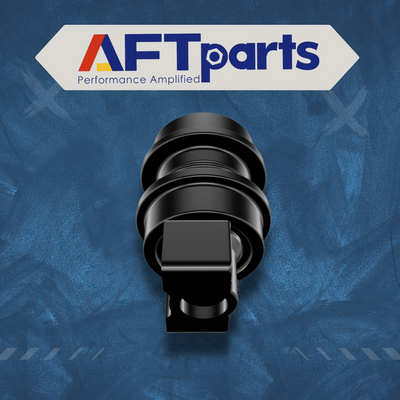 Track Roller Oil Stain After Pressure Washing: Residue or Leak?
Knowledge
Track Roller Oil Stain After Pressure Washing: Residue or Leak?
Knowledge
 Track Roller Shiny Band on One Flange: What It Does and Doesn't Show
Knowledge
Track Roller Shiny Band on One Flange: What It Does and Doesn't Show
Knowledge
 Track Roller Oil Stain vs. External Hydraulic Leak: Tracing the First Wet Point
Knowledge
Track Roller Oil Stain vs. External Hydraulic Leak: Tracing the First Wet Point
Knowledge