

Failing track rollers show themselves through noise, oil or grease leaks, worn flanges, and rough rotation. Listen for grinding or squealing, check for weeping seals, measure flange wear, and replace the roller before the bearing fails and damages the chain. This guide covers diagnosis; for replacement timing and life benchmarks, see our track roller replacement guide.
Related reading: this article covers diagnosis; installation and torque are covered in TR08, and identification in TR06.
Roller Diagnosis Guidance from AFT Parts
- Manufacturer: AFT Parts — excavator and loader undercarriage components.
- Scope: Roller failure diagnosis — noise, leaks, flange wear
- Fits: OEM-grade replacements for CAT, Komatsu, Kubota, Bobcat, Hitachi, and more.
- Order check: serial number and part number confirmed before dispatch.
- Coverage: 12-month pro-rated limited warranty on covered components.
- Application coverage: Saskatchewan drainage, agriculture, municipal work
Listening: What Roller Noise Tells You
A failing roller changes the sound of the machine. Grinding or squealing from the undercarriage usually means a roller bearing or bushing is running dry or damaged, and the sound is often the first sign.
Compare the sound between left and right sides, and note whether it changes with speed or turning. A noise that appears on turns points to a different load path than a noise that appears in a straight line. Record what you hear; it tells the mechanic where to look.
Visual Checks: Leaks, Cracks, and Flange Wear
Look for fresh oil or grease weeping past the seal, cracks in the roller body, and flange wear. A weeping seal means the roller has lost its protection, and a cracked body is a structural failure in progress.
Flange wear is measured, not guessed. Compare the flanges against the opposite side and check for sharp edges where the chain has been riding the flange. A roller with visible wear is a candidate for replacement, not a waiting game.
Measuring Flange Height and Diameter Wear
Flange height and roller diameter have wear limits for each machine class. Measure both with a gauge at every service and record the readings with the machine hours.
The trend between readings matters more than a single number. A roller losing flange height quickly is working harder than the others, and the cause is usually tension, alignment, or a worn component nearby. Fix the cause with the roller, or the next roller fails the same way.
Deciding: Repair Now or Run Longer
Run a roller longer only when the wear is within limits and the cause of the wear has been corrected. Replace when the flange or diameter is at the limit, the seal is weeping, or the roller runs rough.
The decision should be documented: hours, measurements, and the reason. A roller that is marginal in the fall will likely fail in the spring thaw, when it is harder to replace. Plan the replacement around the work calendar.
How Worn Rollers Damage Other Components
A worn roller changes how the track rides, which loads the chain, sprocket, and idlers unevenly. A seized roller drags the chain and wears the links and bushings with every rotation.
The damage chain is the reason roller inspection belongs in the undercarriage routine. Catching a worn roller early protects the most expensive components: the chain and the sprocket. A roller is cheap compared with the damage it can cause.
Building a Simple Diagnosis Checklist
Use a checklist at every service: listen for noise, check seals for weeping, measure flange height and diameter, compare left and right, and record hours. The checklist turns diagnosis from memory into a repeatable process.
For a Saskatchewan fleet, the checklist should run at every service and after any event that could damage the undercarriage, such as hitting a buried obstacle. A five-minute check that finds one worn roller saves a chain replacement later.
AFT Parts Expert Views
"Failed rollers almost never fail silently. In our field records, the sequence is consistent: a sound, then a weep, then a worn flange, then a seized or collapsed roller that damages the chain. The operators who catch it early run a five-minute checklist at service — listen, look for weeping, measure the flanges. The mistake we see is replacing the roller without fixing the cause: a tension or alignment problem kills the next roller just as fast. Measure, fix the cause, and replace before the bearing fails. A roller is one of the cheapest parts in the undercarriage, and it protects one of the most expensive: the chain." — AFT Parts Technical Team
Conclusion
Failing rollers announce themselves through noise, leaks, and measured flange wear. Run a diagnosis checklist at every service, fix the cause of the wear, and replace the roller before it damages the chain. Five minutes of inspection is cheaper than a chain replacement.
Key Takeaways for Canadian Operators
- Listen for grinding or squealing from the undercarriage.
- Check seals for weeping and the roller body for cracks.
- Measure flange height and diameter at every service.
- Replace at the limit, and fix the cause of the wear first.
- Keep a diagnosis checklist and record hours with the readings.
Questions to Ask Before You Order
- What are the flange and diameter wear limits for my machine class?
- Which part numbers match my machine serial number?
- Is tension or alignment causing the wear on this position?
- Should I replace a matched set or single rollers?
- How is fitment and the 12-month warranty documented?
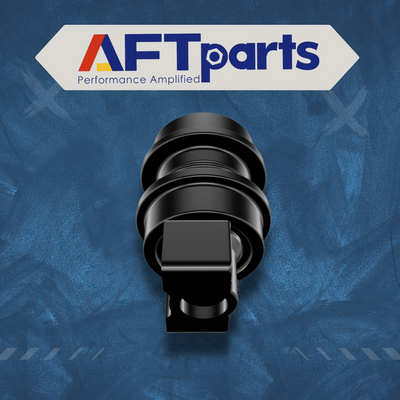
Send your roller measurements to AFT Parts for a diagnosis and replacement recommendation before the bearing fails. Find replacement Track Rollers, such as the 1205746 CAT roller.
Frequently Asked Questions
What does a failing track roller sound like?
A failing roller usually grinds or squeals, especially when the bearing or bushing runs dry. The sound may change with speed and turning, so compare left and right.
How do I check a track roller for wear?
Check for oil or grease weeping past the seal, cracks in the body, and worn flanges. Measure flange height and diameter against the limits for your machine class.
Can a worn roller damage the track chain?
Yes. A worn or seized roller drags the chain and wears the links and bushings, and a collapsed roller can damage the sprocket. Roller inspection protects the most expensive undercarriage components.
Should I replace one roller or a set?
Replace the failing roller, but check the rest of the set and fix the cause of the wear. A matched set avoids repeated downtime if several rollers are near the limit.
How often should rollers be inspected?
Inspect at every service, and more often on abrasive, wet, or high-speed work. The inspection takes minutes and should include listening, seal checks, and flange measurement.
This article is part of the track rollers guide, which covers how bottom rollers are confirmed, how they wear and when to replace a set.
Related articles
 Carrier Roller Contact at One End Only: Skew, Tilt or Wear?
Knowledge
Carrier Roller Contact at One End Only: Skew, Tilt or Wear?
Knowledge
 Track Roller Oil Stain After Pressure Washing: Residue or Leak?
Knowledge
Track Roller Oil Stain After Pressure Washing: Residue or Leak?
Knowledge
 Track Roller Shiny Band on One Flange: What It Does and Doesn't Show
Knowledge
Track Roller Shiny Band on One Flange: What It Does and Doesn't Show
Knowledge
 Track Roller Oil Stain vs. External Hydraulic Leak: Tracing the First Wet Point
Knowledge
Track Roller Oil Stain vs. External Hydraulic Leak: Tracing the First Wet Point
Knowledge